

LWSLaw With Shivanshi

FIELD NOTES

Where law school took me.

UNOFFICIAL HANDBOOK

Explore lines of work, not a compulsory ladder.

01 · FIELD NOTES

What can a law student explore beyond ordinary coursework, and how can they begin?

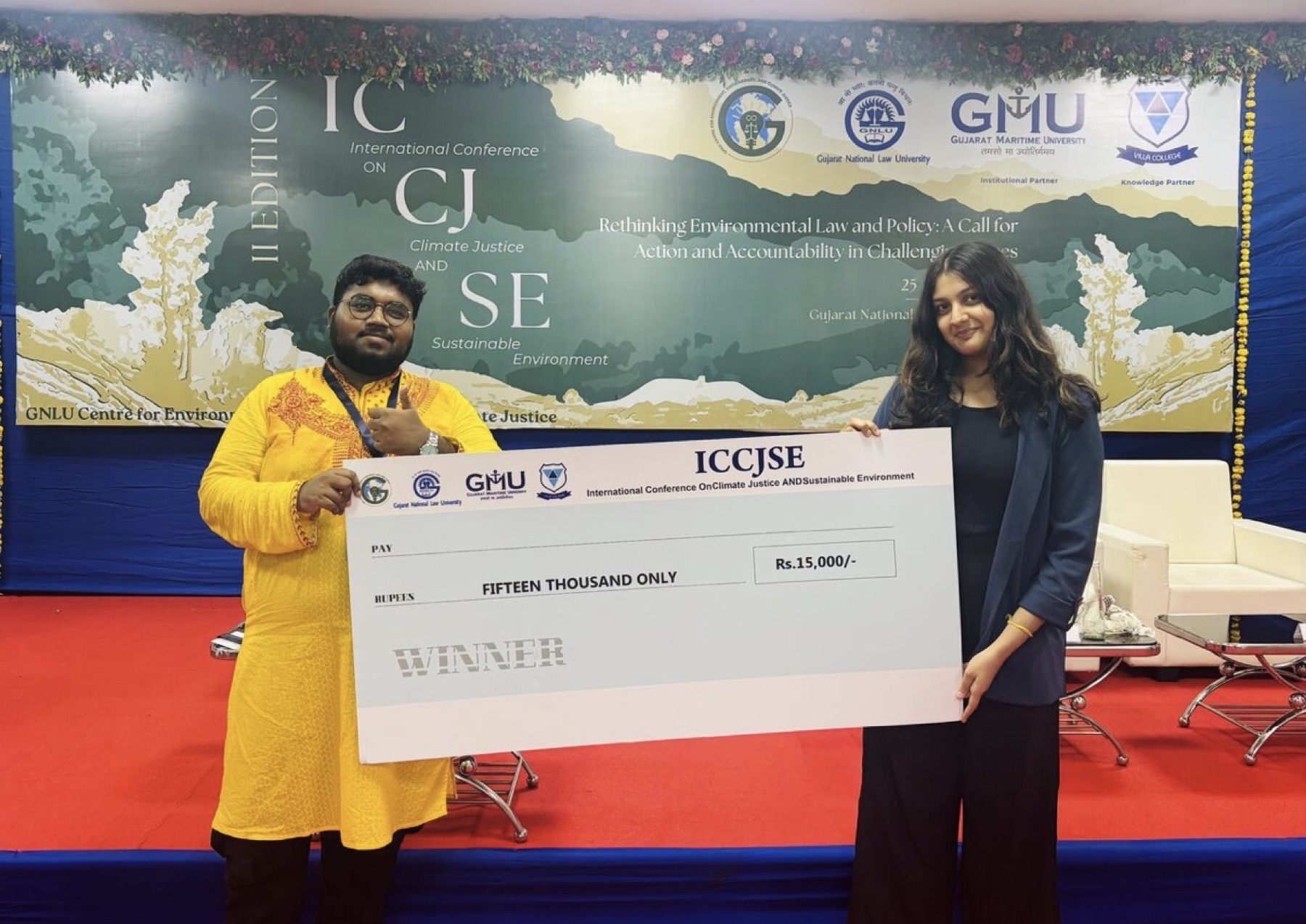
Shivanshi and participants at a GNLU academic conferenceShivanshi standing at GNLU
FROM THE CONFERENCE FILES · GNLU

An academic room can change the question.

Conferences create a different kind of classroom: the argument leaves the page, meets questions from other disciplines and returns altered. This field note keeps the experience close to the work itself—the paper, the conversation and what became clearer after presenting it aloud.

Read the original LinkedIn post ↗

02 · WAYS BEYOND THE CLASSROOM

Possibilities, not mandatory achievements.

Moots and simulated advocacy

Use this path to test an interest, understand the work or build a specific skill. Eligibility, access and the value of the experience depend on the actual programme and your circumstances.

Negotiation and mediation competitions

Use this path to test an interest, understand the work or build a specific skill. Eligibility, access and the value of the experience depend on the actual programme and your circumstances.

Legal aid and pro bono work

Use this path to test an interest, understand the work or build a specific skill. Eligibility, access and the value of the experience depend on the actual programme and your circumstances.

Research assistantships

Use this path to test an interest, understand the work or build a specific skill. Eligibility, access and the value of the experience depend on the actual programme and your circumstances.

Student journals and editorial boards

Use this path to test an interest, understand the work or build a specific skill. Eligibility, access and the value of the experience depend on the actual programme and your circumstances.

Conferences and paper presentations

Use this path to test an interest, understand the work or build a specific skill. Eligibility, access and the value of the experience depend on the actual programme and your circumstances.

Calls for papers

Use this path to test an interest, understand the work or build a specific skill. Eligibility, access and the value of the experience depend on the actual programme and your circumstances.

Legal writing and online commentary

Use this path to test an interest, understand the work or build a specific skill. Eligibility, access and the value of the experience depend on the actual programme and your circumstances.

Policy and empirical research projects

Use this path to test an interest, understand the work or build a specific skill. Eligibility, access and the value of the experience depend on the actual programme and your circumstances.

Internships and court exposure

Use this path to test an interest, understand the work or build a specific skill. Eligibility, access and the value of the experience depend on the actual programme and your circumstances.

Fellowships, scholarships and exchange opportunities

Use this path to test an interest, understand the work or build a specific skill. Eligibility, access and the value of the experience depend on the actual programme and your circumstances.

03 · UNDERSTANDING PUBLICATIONS

Not every legal publication is the same.

Journal article

A sustained academic argument engaging substantially with primary and secondary authority. Usually longer and more heavily footnoted. Editorial and review practices vary by journal.

Essay

A shorter, more focused argument that may be conceptual, critical or interventionist without attempting the full breadth of a long article.

Case note or case comment

A focused analysis of a judgment, ordinarily explaining the holding, reasoning, legal context and significance rather than merely summarising facts.

Legislative or regulatory comment

Analysis of a statute, bill, rule, regulation, consultation paper or regulatory development.

Blog or online analysis

A shorter and more time-sensitive piece written for accessible online reading. It should still use reliable sources, links and careful legal reasoning.

Book review or review essay

A critical engagement with one or more books rather than a chapter-by-chapter summary.

Conference paper

Work prepared for presentation and discussion. Conference participation and journal publication are separate processes unless the organiser expressly provides otherwise.

Compare before submitting

Purpose · depth · relative length · speed · audience · submission method · review model. Use only the word limits supplied by the publication’s current official guidance.

04 · WHY PUBLISH?

A question worth giving structure.

Publishing is most useful when it gives a question enough structure to survive scrutiny. It can teach you to define a problem carefully, work with authority, anticipate objections and revise an argument after someone else has tested it. A publication can become evidence of sustained interest in an area, but the purpose is not to collect titles beside your name. The work should still begin with a question worth answering.

05 · WHERE TO PUBLISH

Established publications to explore

This is a research index, not a ranking or promise of acceptance. Always reopen the official guidance before submitting.

7 verified or review-pending records

unverified · checked 23 September 2026

National Law School of India Review

NLSIU · General law

Accepted format
Unverified
Review model
Unverified

The supplied domain currently redirects to unrelated content. Do not rely on it until NLSIU confirms a safe official page.

Open official or supplied source ↗
unverified · checked 23 September 2026

NLSIR Online

NLSIU · Online legal analysis

Accepted format
Unverified
Review model
Unverified

The supplied domain currently redirects to unrelated content. Verification is required.

Open official or supplied source ↗
unverified · checked 23 September 2026

NUJS Law Review

WBNUJS · General law

Accepted format
Official page temporarily unavailable
Review model
Unverified
Open official or supplied source ↗
active · checked 23 September 2026

European Journal of International Law

Oxford University Press · International law

Accepted format
Articles and other formats per current guidelines
Review model
Peer reviewed
Open official or supplied source ↗
active · checked 23 September 2026

Journal of International Economic Law

Oxford University Press · International economic law

Accepted format
Articles, notes and book reviews
Review model
Peer reviewed
Open official or supplied source ↗
active · checked 23 September 2026

Arbitration International

Oxford University Press / LCIA · International arbitration

Accepted format
Full manuscripts
Review model
Peer reviewed
Open official or supplied source ↗
active · checked 23 September 2026

Hong Kong Law Journal

University of Hong Kong · General law

Accepted format
See current contributor notes
Review model
See official page
Open official or supplied source ↗

06 · PUBLISHING INTERNATIONALLY

What changes when you submit internationally?

1. Choose by subject and fit, not merely by name

Check the particular journal’s aims, recent issues, audience, instructions, review model, integrity requirements, access terms and fees. Explain unfamiliar institutions and show why the argument matters beyond its immediate jurisdiction.

2. Make the jurisdiction legible

Check the particular journal’s aims, recent issues, audience, instructions, review model, integrity requirements, access terms and fees. Explain unfamiliar institutions and show why the argument matters beyond its immediate jurisdiction.

3. Distinguish local detail from the wider question

Check the particular journal’s aims, recent issues, audience, instructions, review model, integrity requirements, access terms and fees. Explain unfamiliar institutions and show why the argument matters beyond its immediate jurisdiction.

4. Follow the journal’s current instructions

Check the particular journal’s aims, recent issues, audience, instructions, review model, integrity requirements, access terms and fees. Explain unfamiliar institutions and show why the argument matters beyond its immediate jurisdiction.

5. Understand the review model

Check the particular journal’s aims, recent issues, audience, instructions, review model, integrity requirements, access terms and fees. Explain unfamiliar institutions and show why the argument matters beyond its immediate jurisdiction.

6. Check research integrity

Check the particular journal’s aims, recent issues, audience, instructions, review model, integrity requirements, access terms and fees. Explain unfamiliar institutions and show why the argument matters beyond its immediate jurisdiction.

7. Expect revision

Check the particular journal’s aims, recent issues, audience, instructions, review model, integrity requirements, access terms and fees. Explain unfamiliar institutions and show why the argument matters beyond its immediate jurisdiction.

8. Check access and fees

Check the particular journal’s aims, recent issues, audience, instructions, review model, integrity requirements, access terms and fees. Explain unfamiliar institutions and show why the argument matters beyond its immediate jurisdiction.

Explore open-access journals through DOAJ ↗

Directory inclusion alone does not guarantee quality. Verify the publisher, peer-review process, fees, archiving and contact details.

07 · CALLS AND OPPORTUNITIES

The opportunities board

OWNER-MODERATED BOARD

No verified opportunities are published yet.

New entries will appear only after their organiser, deadline, timezone, eligibility, fee and official source have been checked. Expired entries will leave the public board while remaining available privately in the Creator Centre.

08 · FIRST AND SECOND YEAR

You do not need to decide your entire career immediately.

FIRST YEAR · BUILD ORIENTATION
  • Learn to find statutes and judgments and brief a case.
  • Try one activity that develops speaking, writing or teamwork.
  • Observe before assuming an activity is or is not for you.
  • Write one short analytical piece and learn basic citation.
  • Use early internships mainly for exposure and observation.
SECOND YEAR · TEST INTERESTS
  • Take a deeper role in a moot, journal, clinic, project or competition.
  • Attempt a longer research piece or case comment.
  • Explore research assistantships and subject-linked internships.
  • Build a writing sample and seek feedback.
  • Compare practice areas before narrowing prematurely.
There is no universally correct year-wise sequence. Eligibility, university rules, personal responsibilities, finances, location and career interests will change what is realistic for each student.
09 · TRYING PATHS

Try paths before you choose one.

An internship sequence can be useful as a planning device, but it should not become a rule that every student follows without asking what they are trying to learn. Early experiences can help you observe courts, research, legal aid, policy, organisations and different kinds of practice. Later choices can become more focused as your interests become clearer. The useful question is not whether an internship looks like the expected next rung; it is whether it gives you a meaningful way to test a field, build a skill or understand the work more honestly.